Buying guide
The Best 65-Inch TVs of 2026
Our editorial picks for the best 65-inch TVs of 2026 — the LG C6 OLED as the all-rounder, the TCL QM8L for bright rooms on a budget, and the Samsung S90H for rooms that are bright by day and dark by night.
Sixty-five inches is where most living-room TV shopping ends up, and for good reason: it fills your view from a typical 8–9 foot sofa distance, and it's the size where every manufacturer fights hardest on price. In 2026 that fight has squeezed the gap between a very good mini-LED and a very good OLED to a few hundred dollars — so the right pick depends far more on your room than on the badge.
These picks are an editorial synthesis of published professional reviews and manufacturer specs, not our own lab measurements. Prices are rough 65-inch street estimates from our October 5, 2026 research; they move weekly, so confirm the live price before you buy.
The short list
| # | Best for | TV | Est. price | |
|---|---|---|---|---|
| 01 | Best overall | 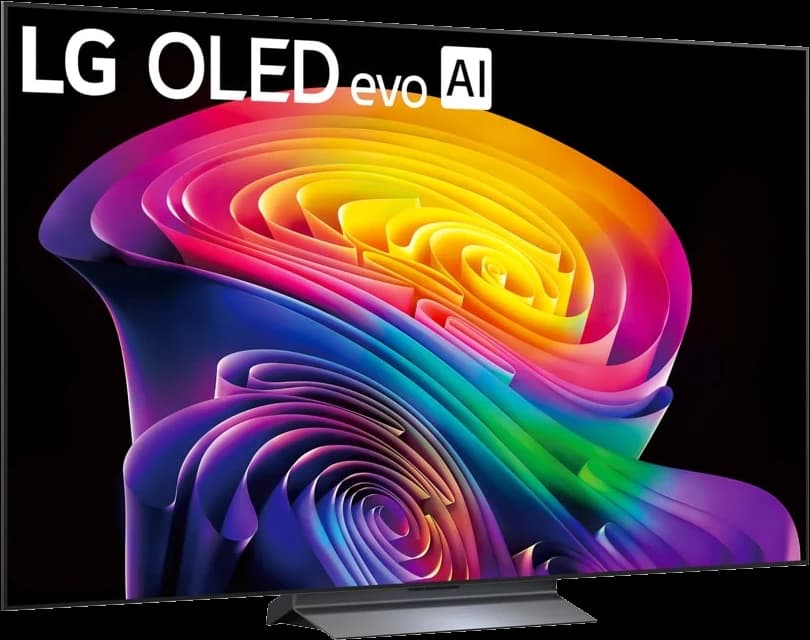 | OLED | ~$1,500 |
| 02 | Best for bright rooms on a budget | 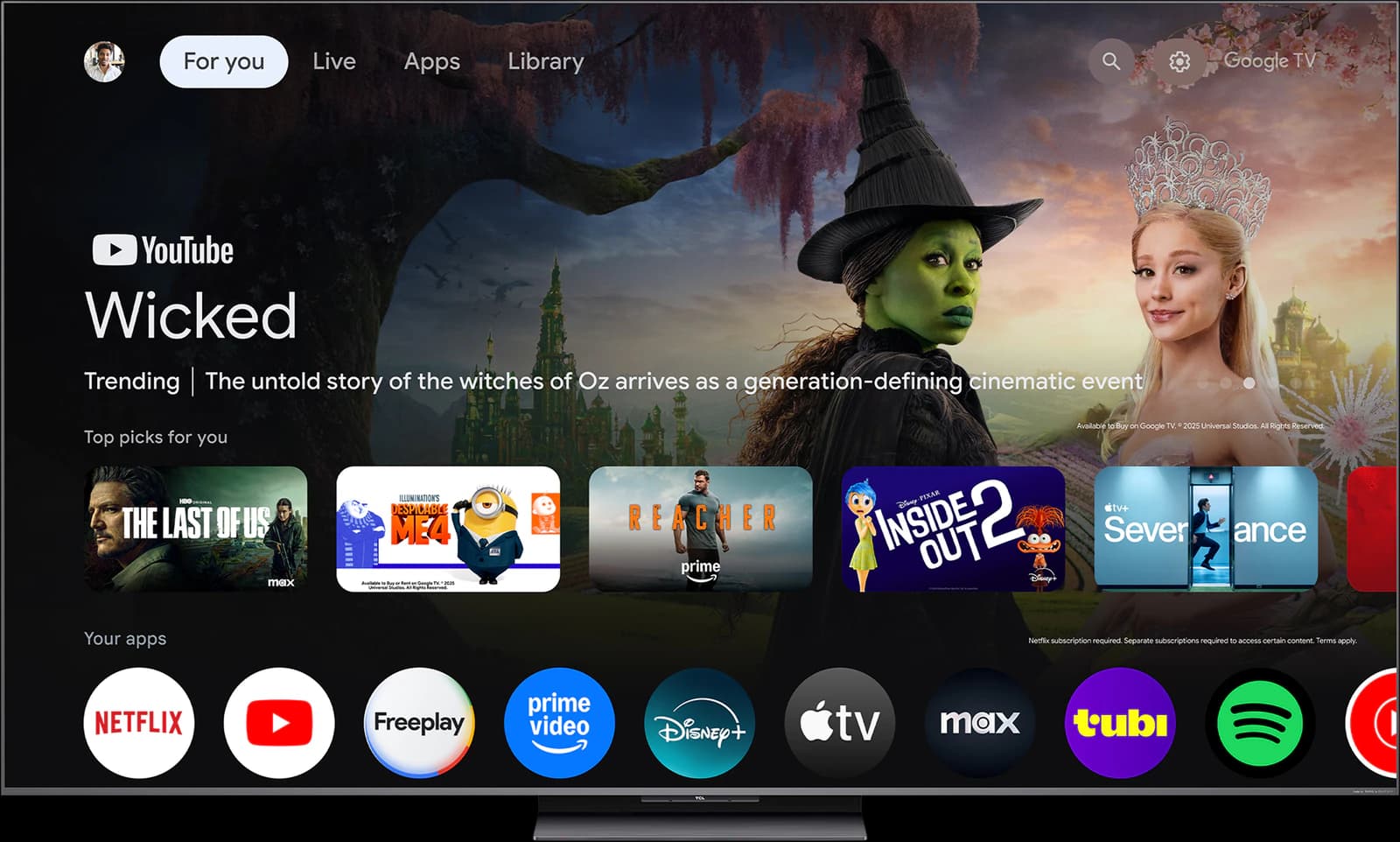 | Mini-LED QLED | ~$1,300 |
| 03 | Best OLED for mixed light | 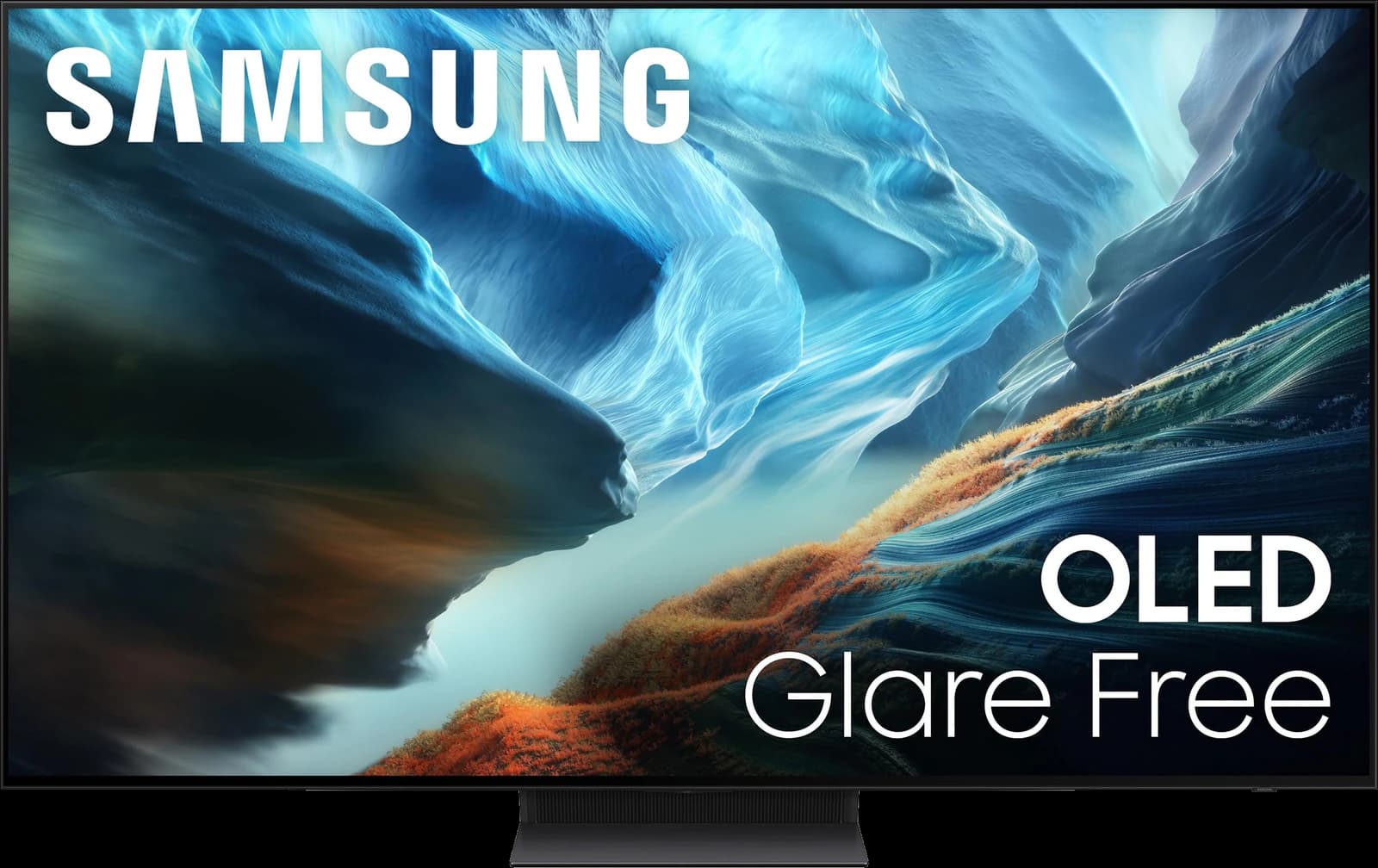 | QD-OLED | ~$2,200 |
Prices are rough street-price estimates, not live quotes.
Ranked
Our picks
- 01
Best overall
LG C6 OLED
- OLED
- 2026
- 42–83"
- ~$1,500
The safest 65-inch recommendation for most people: OLED contrast, the deepest gaming feature set in the class, and a 65-inch price that has settled around $1,500 at LG.com.
Highlights
- Highlight: Per-pixel OLED contrast with perfect blacks for dark-room movies
- Highlight: Four HDMI 2.1 ports with up to 4K/165Hz, VRR, G-Sync, and FreeSync
- Highlight: Dolby Vision (including Dolby Vision gaming on Xbox) plus Filmmaker Mode
- Highlight: Alpha 11 AI Processor Gen3 and a mature webOS platform
Trade-offs
- Trade-off: Not as bright as mini-LED or glare-free QD-OLED rivals in a sun-filled room
- Trade-off: Glossy screen can pick up reflections in bright rooms
- Trade-off: Static logos left on for many hours a day carry a small long-term burn-in risk
- Bright room
- 3 out of 5
- Dark room
- 5 out of 5
- Movies
- 5 out of 5
- Sports
- 4 out of 5
- Gaming
- 5 out of 5
- Value
- 4 out of 5
Editorial fit scores, 1–5 — not lab measurements.
Check priceAffiliate link — opens a retailer search.
- 02
Best for bright rooms on a budget
TCL QM8L
- Mini-LED QLED
- 2026
- 65–98"
- ~$1,300
Mini-LED brightness that competes with sets costing twice as much. If your living room has big windows, it will look punchier than any OLED at the price.
Highlights
- Highlight: Huge peak brightness and strong local dimming for the money
- Highlight: Available in very large sizes (75/85/98) at aggressive street prices
- Highlight: Good gaming feature set with high refresh and VRR
- Highlight: Google TV with a full streaming app catalog
Trade-offs
- Trade-off: Blooming and viewing angles trail premium OLEDs and Sony processing
- Trade-off: Google TV can feel less polished than webOS on some days
- Trade-off: Build and speakers are value-tier versus flagship brands
More views
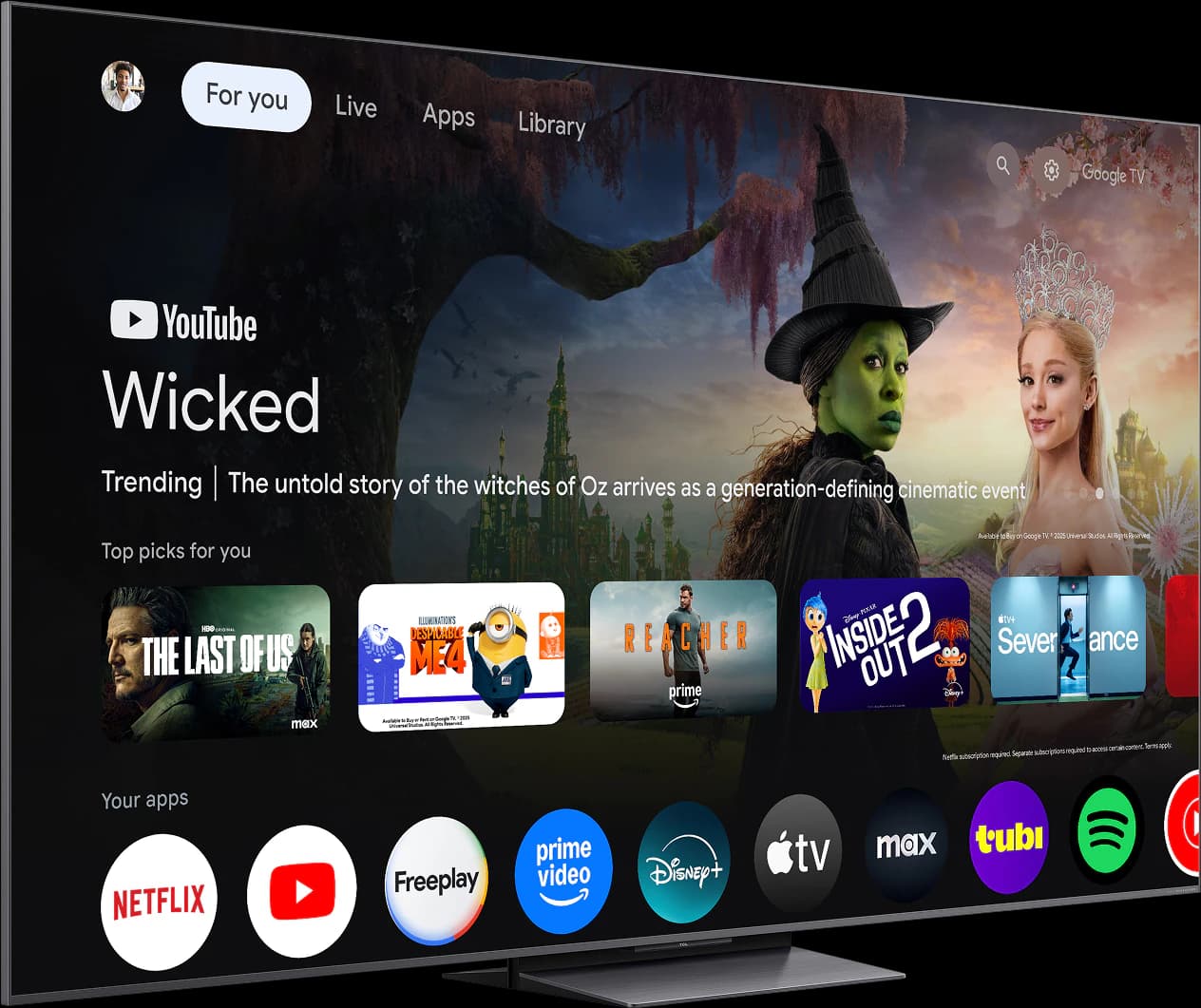
Images: TCL
- Bright room
- 5 out of 5
- Dark room
- 4 out of 5
- Movies
- 4 out of 5
- Sports
- 5 out of 5
- Gaming
- 4 out of 5
- Value
- 5 out of 5
Editorial fit scores, 1–5 — not lab measurements.
Check priceAffiliate link — opens a retailer search.
- 03
Best OLED for mixed light
Samsung S90H OLED
- QD-OLED
- 2026
- 42–83"
- ~$2,200
Brighter, more saturated highlights than a conventional OLED plus a glare-taming screen — the OLED to get if your room is sunny by day and dark by night.
Highlights
- Highlight: QD-OLED color volume with Glare Free tech on the S90H
- Highlight: Motion Xcelerator up to 165Hz with G-Sync and FreeSync Premium Pro
- Highlight: Four HDMI 2.1 ports and a polished Game Bar
- Highlight: Strong HDR punch for mixed lighting versus a traditional WOLED
Trade-offs
- Trade-off: No Dolby Vision — HDR10+ and HDR10 only on Samsung sets
- Trade-off: Tizen is polarizing; some prefer webOS or Google TV
- Trade-off: Panel type can vary by size/region historically — confirm the listing
- Bright room
- 4 out of 5
- Dark room
- 5 out of 5
- Movies
- 5 out of 5
- Sports
- 4 out of 5
- Gaming
- 5 out of 5
- Value
- 4 out of 5
Editorial fit scores, 1–5 — not lab measurements.
Check priceAffiliate link — opens a retailer search.
How we picked
We start with the room, not the spec sheet. A 65-inch TV is big enough that reflections, off-angle seating, and ambient light all show up, so we weight how each set copes with real lighting, then how it handles what you watch most (movies, sports, or games), then whether it earns its price against the alternatives.
Every major panel technology is available at 65 inches — conventional OLED, QD-OLED, quantum-dot mini-LED, and the new RGB mini-LED flagships — which is why this size gets three very different picks rather than one winner.
OLED or mini-LED at 65 inches?
OLED lights each pixel individually, so it can switch pixels fully off: perfect blacks, no halos around subtitles, and near-instant response for games. Mini-LED TVs are LCDs lit by thousands of tiny LEDs grouped into dimming zones. They get much brighter — especially across the whole screen at once — but can show faint blooming around bright objects on dark backgrounds.
In a dark or dim room, OLED usually wins. In a bright room with lots of daylight, a good mini-LED usually wins. If your room swings between the two, a brighter QD-OLED like the Samsung S90H is the compromise. Our OLED vs mini-LED guide goes deeper.
Who should skip our top pick
The LG C6 is the best fit for the most people, not for everyone. Here's where we'd steer you instead:
- Very bright room: the TCL QM8L for value, or the Sony Bravia 5 if you want Sony's processing.
- Dark-room movie fan on a tighter budget: the LG B6 gets you OLED contrast for less, with less brightness.
- Under about $1,000: the Hisense U8QG is the brightness-per-dollar pick.
- Money is no object: the Sony Bravia 9 II (bright rooms) or LG G6 (OLED) — see our flagship comparison.
Viewing distance for a 65-inch TV
By the rule of thumb our decision helper uses (screen diagonal ≈ viewing distance in inches ÷ 1.6), a 65-inch 4K TV is the natural fit for a sofa about 8 to 9 feet away. From 6 to 7 feet it feels big and immersive — great for movies and games. Beyond about 10 feet, a 75-inch is worth pricing out.
About the video
The embedded video is RTINGS' review of the LG C6. Its title sums the C6 up as "more of the same" — which is a compliment to a TV that was already the default recommendation, and a hint that a discounted 2025 LG C5 can be a smart alternative. Our 2026 vs 2025 guide covers when last year's model is the better buy.
Frequently asked questions
Is the LG C6 worth it over the LG B6?
For most people, yes. The C6 is brighter, has a faster refresh rate for PC gaming, and holds up better in rooms with some daylight. The B6 makes sense if you watch mostly at night and the price gap at 65 inches is wide — at our October 2026 estimates it can be a few hundred dollars.
Is 65 inches too big for my living room?
Usually not. If you sit 7 feet or more from the screen, 65 inches is comfortable and immersive. People rarely regret going bigger; they often regret going smaller. Measure your media console too — some 65-inch TVs use feet near the edges and need a wide surface.
Should I wait for Black Friday?
If you can, prices on 65-inch sets typically dip around Black Friday and again in the weeks before the Super Bowl. But today's 2026 prices are already well below launch MSRPs, so if a pick on this page is at or below our estimate, it's a reasonable time to buy.
Related guides
Disclosure: Our picks are independent and editorial — a synthesis of public reviews and specs, not our own lab measurements. We may earn a commission from qualifying purchases made through links on this page, at no extra cost to you.