Buying guide
What Size TV Should I Get? A Viewing-Distance Chart
How big a TV should you buy for how far away you sit? A plain-language viewing-distance chart for 55- to 98-inch TVs, the simple formula behind it, and our picks at each size.
"What size TV should I get?" has a better answer than "as big as you can afford" — though that's closer to right than most people expect. The number that matters is the distance from your eyes to the screen. Measure it, and a simple ratio gets you to a size that feels immersive without making you turn your head to follow the action.
The chart below uses rules of thumb, not measurements: the ratio our decision helper uses, plus the wider range behind industry guidance like SMPTE's and THX's. Treat it as a starting point, then adjust for your room, your eyesight, and what you watch. TV picks are editorial, synthesized from published reviews and manufacturer specs; prices are rough estimates from our October 5–6, 2026 research.
The short list
| # | Best for | TV | Est. price | |
|---|---|---|---|---|
| 01 | 55-inch pick (about 6–8 feet) | 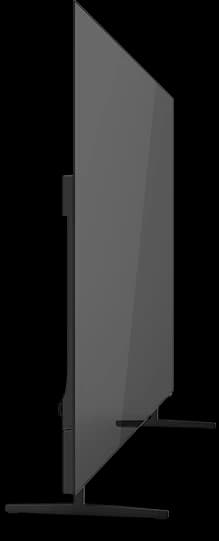 | OLED | ~$1,000 |
| 02 | 65-inch pick (about 8–9 feet) | 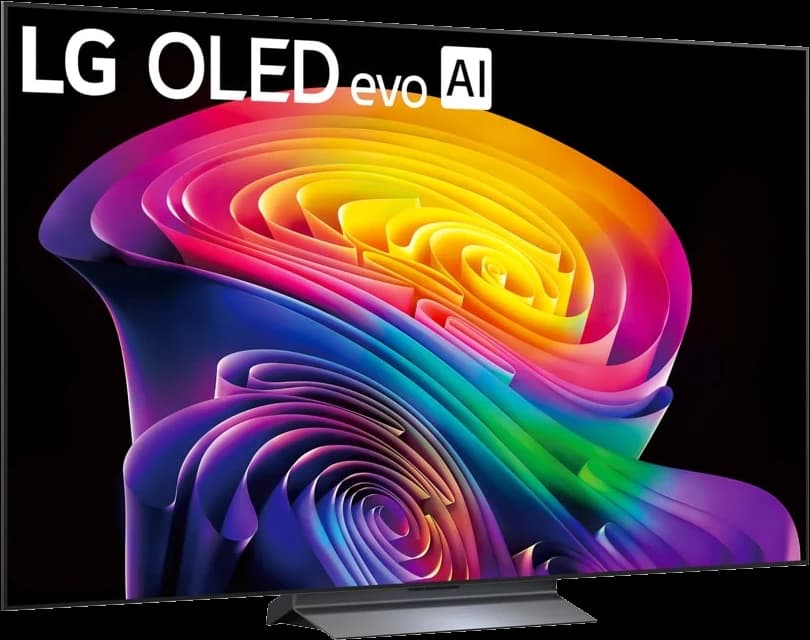 | OLED | ~$1,500 |
| 03 | 75-inch pick (about 9–11 feet) | 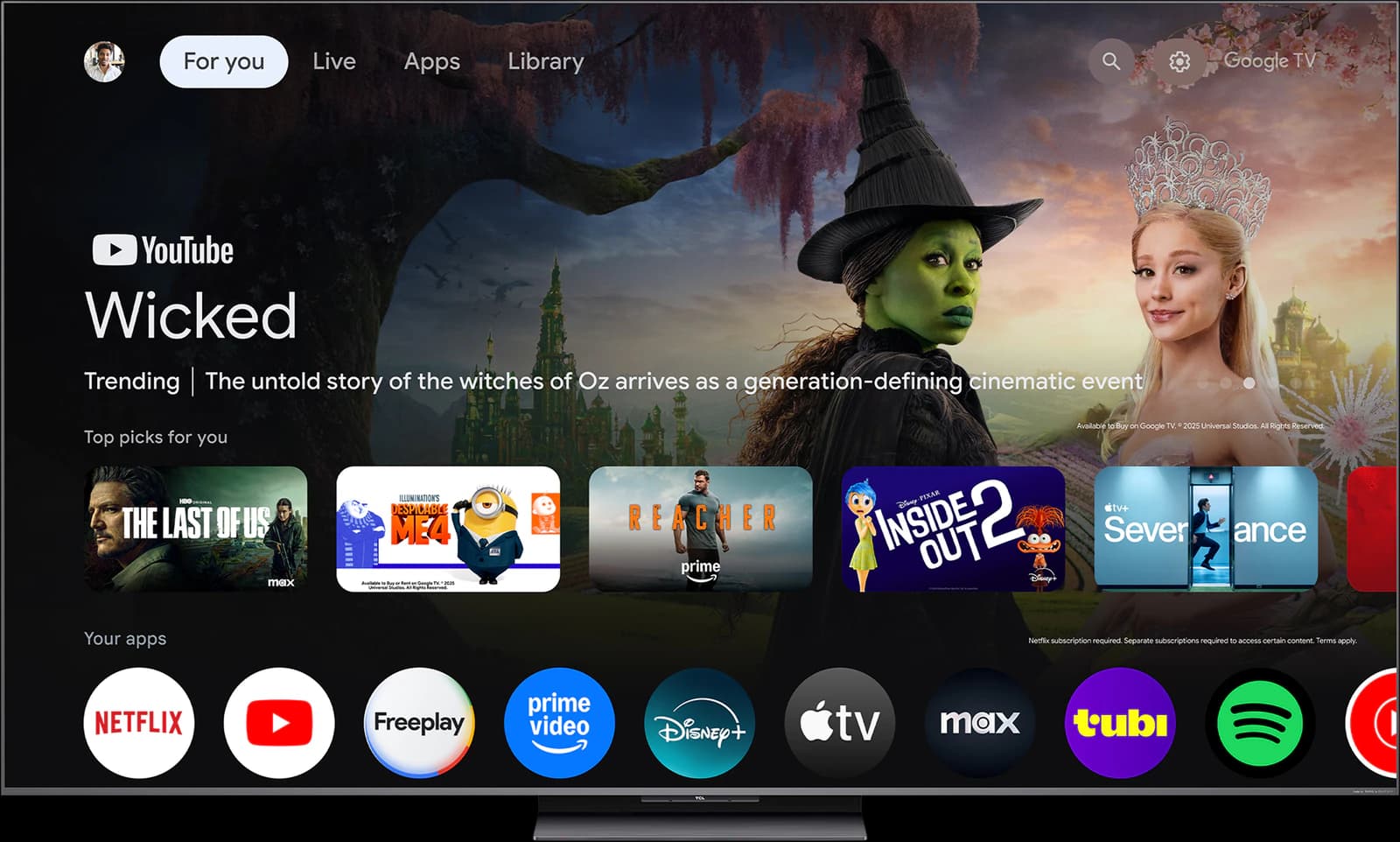 | Mini-LED QLED | ~$1,300 |
| 04 | 85-inch pick (about 10–12 feet) | 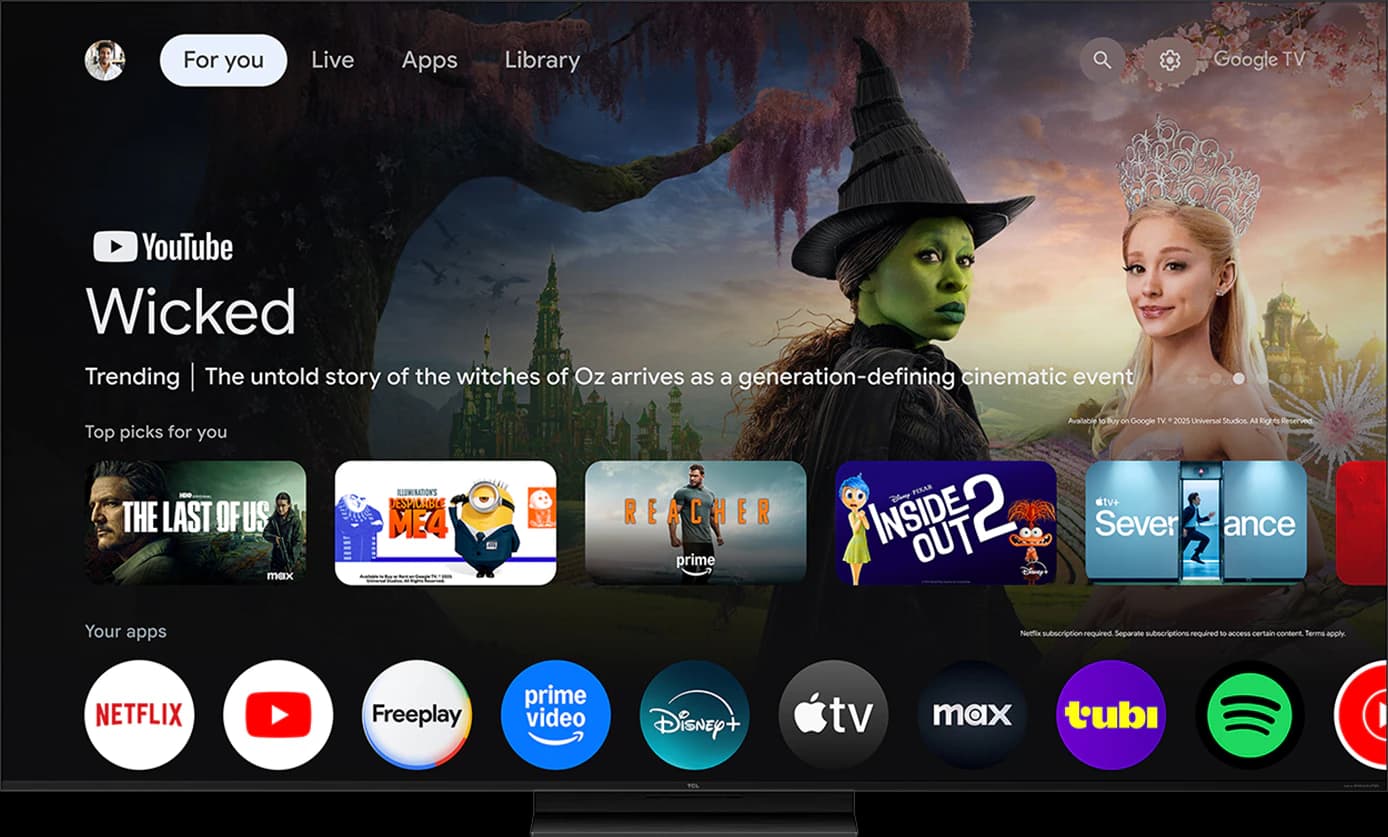 | Mini-LED QLED | ~$800 |
Prices are rough street-price estimates, not live quotes.
Ranked
Our picks
- 01
55-inch pick (about 6–8 feet)
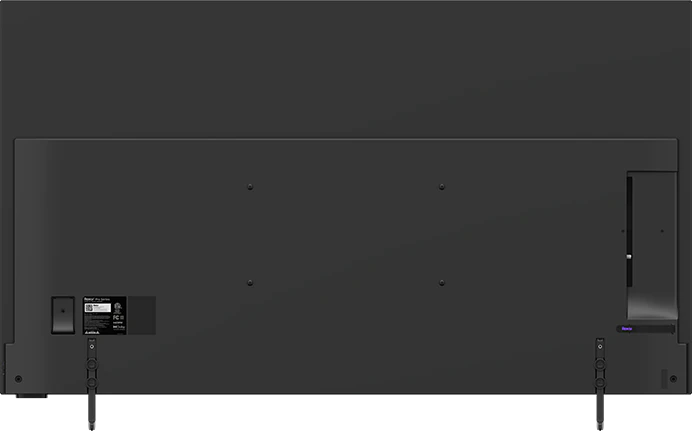
Roku Pro Series OLED
- OLED
- 2026
- 55–65"
- ~$1,000
At 55 inches, OLED is at its most affordable, and Roku's first OLED lists at $999 for that size with frequent Amazon discounts. It's a dark-room TV; in a bright room, look at the TCL QM7L instead.
Highlights
- Highlight: Self-lit 4K OLED panel with perfect blacks for dark-room movies
- Highlight: Four HDMI 2.1 ports (one with eARC), 120Hz, VRR with FreeSync Premium, and automatic game mode
- Highlight: Dolby Vision and HDR10+, plus the simple, fast Roku OS
- Highlight: Amazon-exclusive and often discounted well below LG and Samsung OLED prices
Trade-offs
- Trade-off: Modest peak brightness — reviewers put it roughly in the 500–650-nit class — so it struggles in bright rooms
- Trade-off: Only 55- and 65-inch sizes
- Trade-off: Picture processing trails the LG C6 and Samsung S90H
- Trade-off: The brighter, 144Hz Pro Series LX OLED is a separate model arriving in October 2026
More views
Images: Roku
- Bright room
- 2 out of 5
- Dark room
- 5 out of 5
- Movies
- 4 out of 5
- Sports
- 3 out of 5
- Gaming
- 5 out of 5
- Value
- 5 out of 5
Editorial fit scores, 1–5 — not lab measurements.
Check priceAffiliate link — opens a retailer search.
- 02
65-inch pick (about 8–9 feet)
LG C6 OLED
- OLED
- 2026
- 42–83"
- ~$1,500
The default 65-inch recommendation for the most common sofa distance: OLED contrast, excellent gaming features, and a 65-inch price around $1,500 in our research.
Highlights
- Highlight: Per-pixel OLED contrast with perfect blacks for dark-room movies
- Highlight: Four HDMI 2.1 ports with up to 4K/165Hz, VRR, G-Sync, and FreeSync
- Highlight: Dolby Vision (including Dolby Vision gaming on Xbox) plus Filmmaker Mode
- Highlight: Alpha 11 AI Processor Gen3 and a mature webOS platform
Trade-offs
- Trade-off: Not as bright as mini-LED or glare-free QD-OLED rivals in a sun-filled room
- Trade-off: Glossy screen can pick up reflections in bright rooms
- Trade-off: Static logos left on for many hours a day carry a small long-term burn-in risk
- Bright room
- 3 out of 5
- Dark room
- 5 out of 5
- Movies
- 5 out of 5
- Sports
- 4 out of 5
- Gaming
- 5 out of 5
- Value
- 4 out of 5
Editorial fit scores, 1–5 — not lab measurements.
Check priceAffiliate link — opens a retailer search.
- 03
75-inch pick (about 9–11 feet)
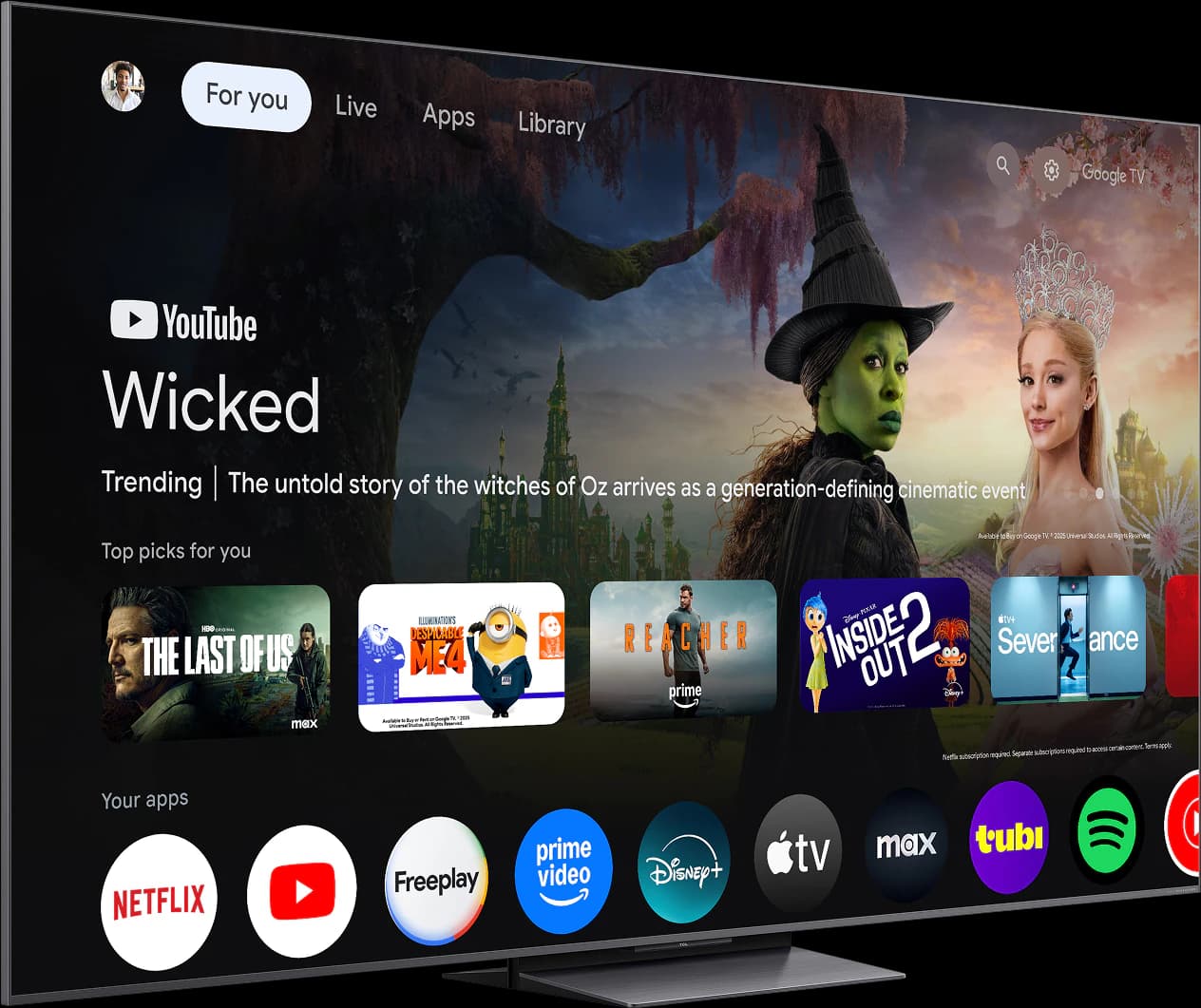
TCL QM8L
- Mini-LED QLED
- 2026
- 65–98"
- ~$1,300
At 75 inches, OLED prices jump and mini-LED takes over. The QM8L was around $1,500 at 75 inches in our October 5 research, with the brightness a big, bright living room needs.
Highlights
- Highlight: Huge peak brightness and strong local dimming for the money
- Highlight: Available in very large sizes (75/85/98) at aggressive street prices
- Highlight: Good gaming feature set with high refresh and VRR
- Highlight: Google TV with a full streaming app catalog
Trade-offs
- Trade-off: Blooming and viewing angles trail premium OLEDs and Sony processing
- Trade-off: Google TV can feel less polished than webOS on some days
- Trade-off: Build and speakers are value-tier versus flagship brands
More views
Images: TCL
- Bright room
- 5 out of 5
- Dark room
- 4 out of 5
- Movies
- 4 out of 5
- Sports
- 5 out of 5
- Gaming
- 4 out of 5
- Value
- 5 out of 5
Editorial fit scores, 1–5 — not lab measurements.
Check priceAffiliate link — opens a retailer search.
- 04
85-inch pick (about 10–12 feet)
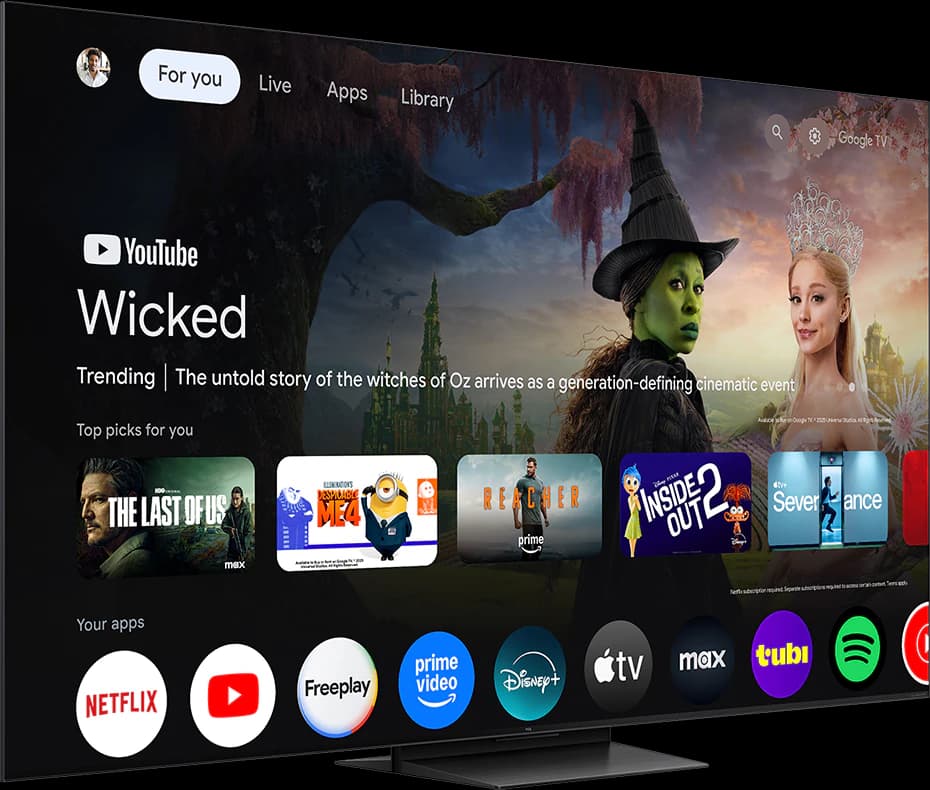
TCL QM7L
- Mini-LED QLED
- 2026
- 55–98"
- ~$800
The least expensive good way into a huge screen. Contrast is a step down from the QM8L, which also comes in 85 and 98 inches if you can stretch.
Highlights
- Highlight: Strong brightness for sunny rooms at a lower price than the QM8L
- Highlight: Large sizes frequently on sale near or under $1,000
- Highlight: Solid VRR / high-refresh gaming for consoles
- Highlight: Google TV smart platform
Trade-offs
- Trade-off: Fewer dimming zones / lower peak brightness than the QM8L
- Trade-off: Not a dark-room OLED substitute
- Trade-off: Processing and motion trail Sony and premium OLEDs
More views
Images: TCL
- Bright room
- 5 out of 5
- Dark room
- 3 out of 5
- Movies
- 3 out of 5
- Sports
- 4 out of 5
- Gaming
- 4 out of 5
- Value
- 5 out of 5
Editorial fit scores, 1–5 — not lab measurements.
Check priceAffiliate link — opens a retailer search.
The simple formula
Measure from where your eyes will be — not the front edge of the sofa — to where the screen will be. Then:
- Our default: screen diagonal ≈ viewing distance in inches ÷ 1.6. That works out to roughly a 30-degree field of view, the figure behind SMPTE's long-standing guidance, and it's what our decision helper uses.
- More cinematic: diagonal ≈ distance ÷ 1.2, close to the roughly 40-degree field of view THX recommends for a theater-like seat. Great for movies and games; a lot for all-day news.
- Farthest comfortable seat: about 2.5 × the diagonal. Sit much farther back and the screen starts to feel small, and you lose most of what 4K adds.
Viewing-distance chart
Rounded to sizes you can actually buy. The first size is our default; the second is where it starts to feel cinematic.
- 5 feet: about 40–43 inches; up to 50 for a cinematic feel.
- 6 feet: about 43–48 inches; up to 55.
- 7 feet: about 55 inches; up to 65.
- 8 feet: about 55–65 inches; up to 75–77.
- 9 feet: about 65 inches; up to 85.
- 10 feet: about 75 inches; up to 98.
- 11 feet: about 83–85 inches; 98 if the wall and budget allow.
- 12 feet and beyond: 85–98 inches.
Working backward from screen size
If you already have a size in mind, here's the cinematic distance, our default, and the farthest comfortable seat for each:
- 55-inch: about 5.5 feet, 7.3 feet, and up to about 11.5 feet.
- 65-inch: about 6.5 feet, 8.7 feet, and up to about 13.5 feet.
- 75-inch: about 7.5 feet, 10 feet, and up to about 15.5 feet.
- 85-inch: about 8.5 feet, 11.3 feet, and up to about 17.5 feet.
- 98-inch: about 9.8 feet, 13 feet, and up to about 20 feet.
Does 4K let you sit closer?
Yes, which is why older advice, written for standard-definition and 1080p sets, told people to sit much farther back. By the usual math for 20/20 vision, you stop being able to pick out individual pixels on a 4K screen beyond about 0.8 × its diagonal, versus about 1.6 × for 1080p. At our default distance, 4K's pixel structure is invisible, and you can sit closer without the image breaking down.
The flip side: at typical distances, the sharpness difference between 4K and 1080p is subtle. What makes a good 4K TV look better at 9 feet is mostly HDR, color, contrast, and upscaling — and an 8K TV adds little you can see at living-room distances.
When to go bigger — or smaller
The formula is a starting point. Adjust it for how you actually use the room:
- Go bigger for movies, sports, and games, and when in doubt. People rarely regret going up a size.
- Go smaller if the TV is mostly for news and background viewing, if the wall or console physically limits you, or if people sit far off to the side.
- Mind the room: a 75- or 85-inch TV on a narrow wall can dominate the space even when the distance says it's fine.
- Try before you buy: tape the screen's outline on the wall, or cut a cardboard template, and live with it for a day.
Screen dimensions for the tape test
A 16:9 screen is about 0.87 × its diagonal wide and 0.49 × its diagonal tall. For the tape outline (screen only; the frame adds a little):
- 55-inch: about 48 × 27 inches.
- 65-inch: about 57 × 32 inches.
- 75-inch: about 65 × 37 inches.
- 85-inch: about 74 × 42 inches.
- 98-inch: about 85 × 48 inches.
Frequently asked questions
What size TV should I get for 10 feet?
About 75 inches by our default formula (120 inches ÷ 1.6), and up to 85 or even 98 inches if you want a cinematic feel and the wall allows it.
How far should I sit from a 65-inch TV?
About 8 to 9 feet by our rule of thumb. Anywhere from roughly 6.5 feet (cinematic) to about 13.5 feet is comfortable.
Is a 75-inch TV too big for 8 feet?
Not by the cinematic rule, which suits about 80 inches at 8 feet for a theater-like view. It will feel big for everyday TV, but if you mostly watch movies, sports, and games, many people love it.
Should I measure from the sofa or from my eyes?
From your eyes. Sofa depth and how you sit can add a foot or more to the distance measured from the front of the cushion, which is enough to change the recommended size.
Is bigger always better?
Mostly, up to the cinematic limit. Beyond that you'll be turning your head to follow the action, and lower-quality sources look softer. In practice, the wall, the console, and the budget usually set the limit first.
Related guides
Disclosure: Our picks are independent and editorial — a synthesis of public reviews and specs, not our own lab measurements. We may earn a commission from qualifying purchases made through links on this page, at no extra cost to you.